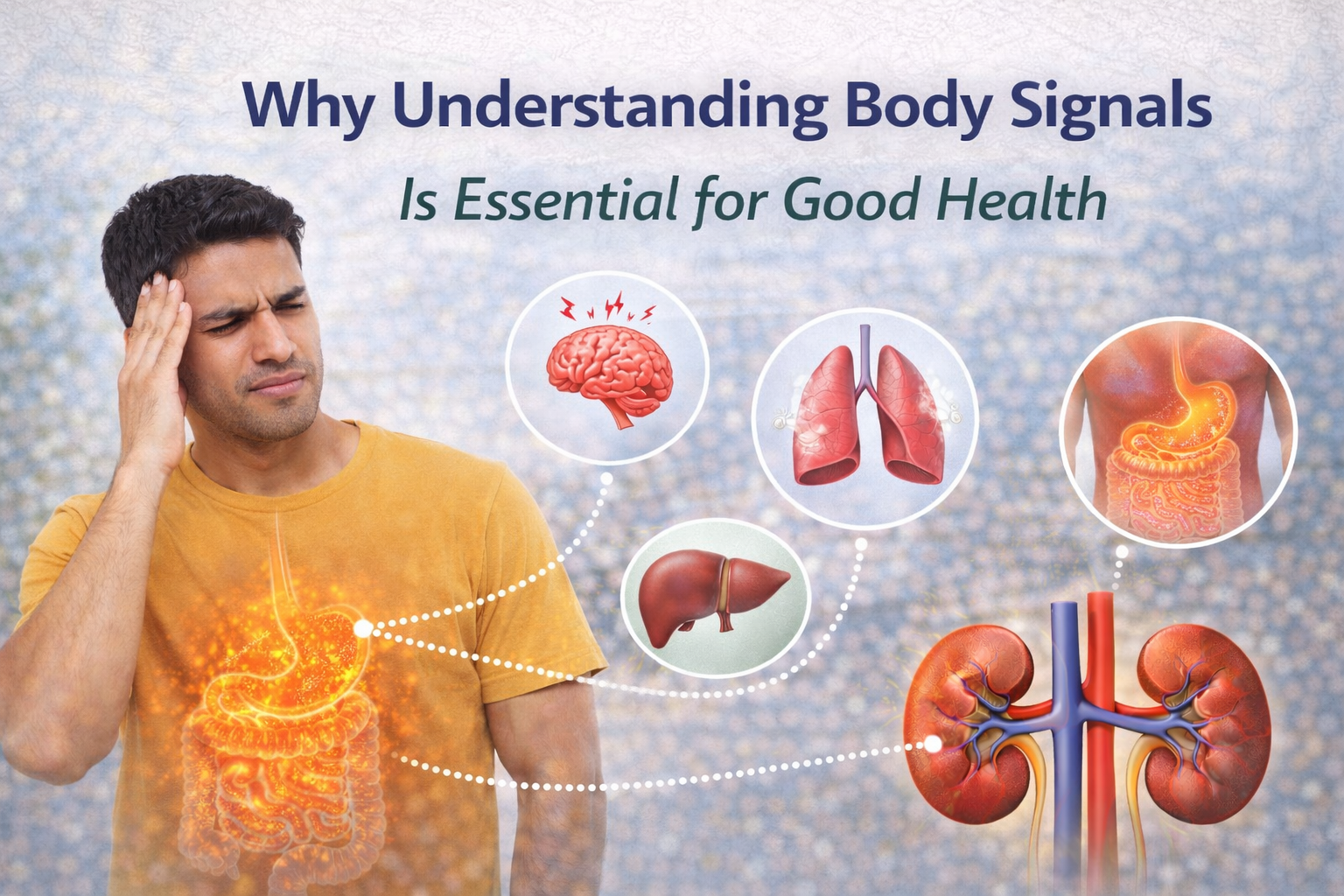
Why Understanding Body Signals Is Essential for Good Health
Why Understanding Body Signals Is Essential for Good Health
We live in a world where we are constantly checking the notifications on our phones, but we often ignore the notifications coming from our own bodies. Your body is incredibly smart; it doesn’t just break down overnight. Long before a major health issue shows up in a lab report, your body has been "whispering" to you through small signs and signals.
Think of your body like a car dashboard. If a small red light flickers, you don’t just tape over it and keep driving—you check the engine. Learning to "speak the language" of your body is the most important skill you can develop for long-term wellness.
The Common "Whispers" We Often Ignore
Your body uses physical sensations to tell you when things are out of balance. Here are a few common signals that people often dismiss:
The Afternoon Slump: If you feel a sudden drop in energy every day at 3:00 PM, your body isn't asking for more caffeine. It’s likely telling you that your blood sugar is unstable or that your last meal was too heavy for your "digestive fire" to handle.
Puffy Eyes and Swollen Ankles: These aren't just signs of a long day. They are often signals from your kidneys saying, "I’m struggling to balance the fluids and salt in your system."
The Coated Tongue: When you wake up, look at your tongue in the mirror. A thick white coating is a clear signal from your gut that there is undigested waste (Amma) in your system.
Skin Breakouts: Your skin is often called the "third kidney." If your internal filters (kidneys and liver) are overwhelmed, your body will try to push toxins out through your skin, resulting in rashes or acne.
A Human Reminder: Be a Partner, Not a Boss
Many of us treat our bodies like a servant—we demand that it works 18 hours a day, eats whatever is convenient, and stays quiet. But true health comes when you treat your body like a partner.
When you feel a headache, instead of reaching for a pill to "silence" the pain, ask yourself: Am I dehydrated? Am I stressed? Did I eat something dead instead of living? When you respond to the whispers, you never have to hear the screams.
Frequently Asked Questions (FAQs)
Q1: How can I start "listening" to my body if I’ve ignored it for years?
Ans: Start with ten minutes of silence a day. Practice Grounding (walking barefoot on the earth) or simply sit quietly and scan your body from head to toe. Notice where you feel tight, heavy, or tired without judging it.
Q2: Are "bubbles in urine" a serious signal?
Ans: If it happens consistently, yes. It is a signal from your kidneys that they might be "leaking" protein. It’s your body’s way of saying the filter is under too much pressure and needs a break from salt, sugar, or stress.
Q3: Why does my body crave sugar when I’m stressed?
Ans: This is a survival signal. Your brain thinks you are in danger and wants quick energy. However, it’s a "false" signal. Instead of sugar, give your body deep breaths or a glass of warm water to calm the nervous system.
Q4: Is a "metallic taste" in the mouth a body signal?
Ans: Yes. In the context of kidney health, a metallic taste (or breath that smells like ammonia) can be a signal that waste products like urea are building up in the blood. It’s a sign to switch to a Living Food Diet immediately.
Q5: Should I wait for these signals to go away on their own?
Ans: Signals are meant to be acted upon. If you change your habits—like improving your sleep or eating more raw fruits—and the signals persist, it’s your body’s way of asking for more specialized care or a deeper detox.
Need Personalized Kidney Care?
Book a free consultation with our kidney specialists today.