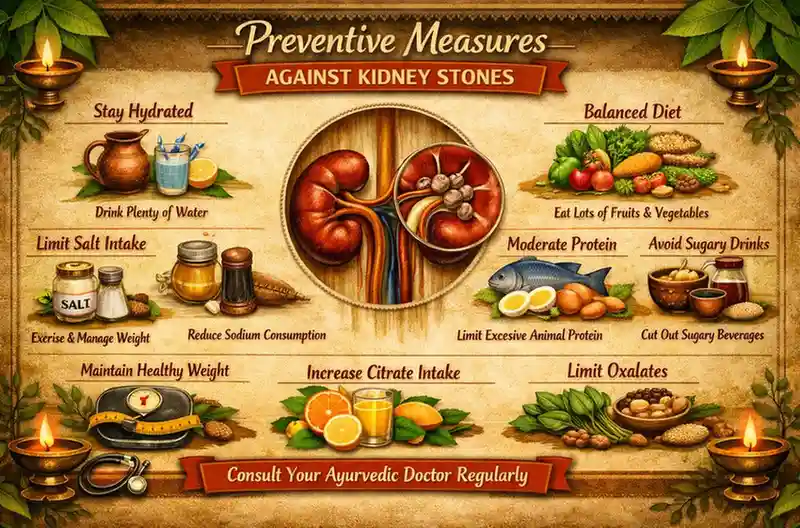
When Should You Start Preventive Measures Against Kidney Stones
When Should You Start Preventive Measures Against Kidney Stones?
An Ayurvedic Perspective
In Ayurveda, kidney stones are known as Mutrashmari — a condition caused by the vitiation of all three doshas, primarily Vata and Kapha, leading to the accumulation of crystalline substances within the urinary tract or Mutra Vaha Srotas. The ancient sages of Ayurveda were clear on one foundational truth: prevention must begin long before disease manifests. This wisdom is captured in the principle "Swasthasya swasthya rakshanam" — protecting the health of the healthy is the foremost duty of medicine.
The answer to when you should start is simple — now, and always.
Ayurveda teaches that the body sends subtle warning signals, known as Purvarupa (prodromal symptoms), well before a disease fully establishes itself. In the case of Mutrashmari, these early signs include mild lower back discomfort, occasional burning during urination, slight cloudiness in urine, or a feeling of incomplete bladder emptying. The moment any of these signs appear, preventive intervention through Ayurvedic herbs, diet, and lifestyle becomes urgent. Waiting for a full-blown stone to form is considered negligence of the body's intelligence.
However, Ayurveda goes even further. Prevention is recommended from youth itself, particularly for individuals with a Kapha-dominant prakriti (body constitution). Such individuals tend to have slower metabolism, higher tendency toward accumulation, and are naturally predisposed to forming crystalline deposits. For them, a Kapha-pacifying diet — avoiding excessive dairy, cold foods, salt, and sedentary habits — is advised from early adulthood as a permanent lifestyle practice.
Those with a family history of kidney stones should initiate preventive measures around the age of 25 to 30 years, as this is when dietary habits solidify and metabolic changes begin. Ayurvedic classics recommend the regular use of herbs like Punarnava (Boerhavia diffusa), Gokshura (Tribulus terrestris), and Varuna (Crataeva nurvala) as kidney tonics that cleanse the urinary tract, dissolve micro-crystals, and maintain healthy urine flow before stones even get a chance to form.
Seasonal transitions, particularly the shift into summer (Greeshma Ritu), are considered high-risk periods in Ayurveda. Dehydration intensifies during this time, causing urine to become concentrated and increasing the risk of crystallization. Ayurveda prescribes enhanced fluid intake using Ushira (vetiver water), Dhaniya (coriander seed water), and coconut water during these months as a preventive seasonal routine.
For individuals who have already passed one kidney stone, the urgency is absolute. Ayurveda considers recurrence highly likely without consistent lifestyle correction. Post-stone management includes Panchakarma therapies like Basti (medicated enema) to balance Vata, along with long-term use of formulations like Cystone, Chandraprabha Vati, and Gokshuradi Guggulu.
Ultimately, Ayurveda does not wait for crisis. Prevention is woven into daily living through proper hydration, mindful eating, seasonal cleansing, and respect for the body's natural rhythms. The kidney, revered in Ayurveda as a seat of vital energy (Ojas), deserves protection not when it fails — but every single day it functions.
Need Personalized Kidney Care?
Book a free consultation with our kidney specialists today.