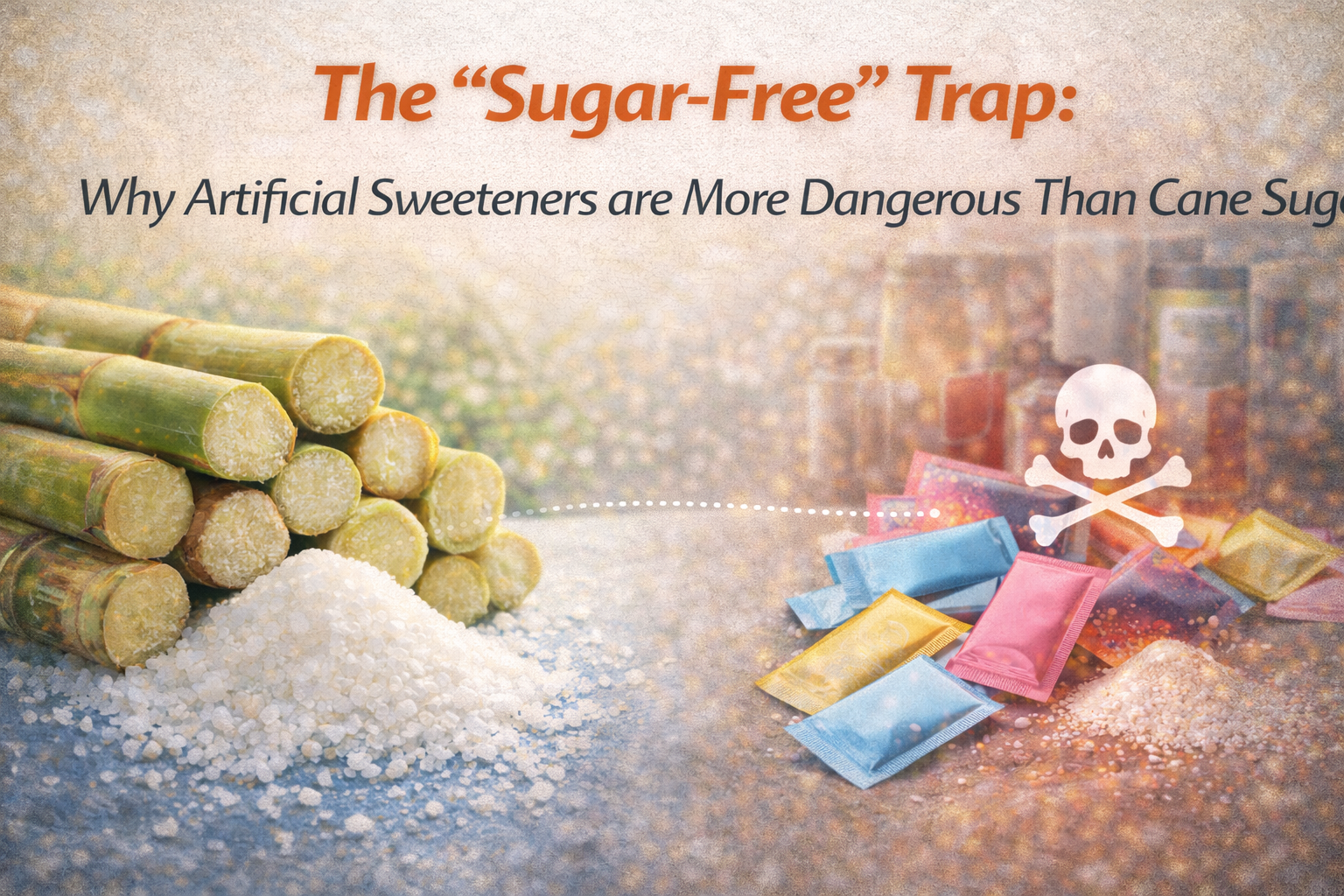
The "Sugar-Free" Trap: Why Artificial Sweeteners are More Dangerous Than Cane Sugar
The "Sugar-Free" Trap: Why Artificial Sweeteners are More Dangerous Than Cane Sugar
If you walk down any grocery store aisle today, you’ll see "Zero Sugar," "Diet," and "Sugar-Free" labels everywhere. For someone trying to manage their weight or control their blood sugar, these seem like a blessing. We think we’ve found a "cheat code"—all the sweetness of a soda or a dessert with none of the calories.
But here is the bitter truth: Your tongue might be fooled, but your body isn't. In many ways, these lab-made chemicals are far more damaging to your metabolism, your gut, and your kidneys than a simple spoonful of raw cane sugar could ever be.
The Brain Confusion (The "Empty Promise")
When you eat something sweet, your brain expects a rush of energy (calories). When you use an artificial sweetener, your tongue sends the "Sweet Alert" to the brain, but the energy never arrives.
The Result: Your brain feels cheated. It stays hungry and actually increases your cravings for real sugar later in the day. This is why people who drink "Diet" sodas often end up gaining more weight than those who don't.
The Insulin Spike: Even though there’s no real sugar, the mere taste of sweetness can trigger your pancreas to release insulin. Over time, this "false alarm" leads to Insulin Resistance, the very thing you were trying to avoid.
A Desert for Your Gut Bacteria
Your gut is home to trillions of tiny workers (microbiome) that manage your immunity and mood. Artificial sweeteners like Aspartame, Sucralose, and Saccharin act like a "weedkiller" in this internal garden.
Studies have shown that these chemicals can change the balance of your gut bacteria in just one week. This imbalance makes your body less efficient at processing real sugar, ironically increasing your risk of Type 2 Diabetes.
The Kidney Burden
Your kidneys are responsible for filtering everything you consume. While the body knows how to process natural glucose, these synthetic molecules are "foreign objects."
The "Chemical Sludge": These sweeteners are highly acidic and create a toxic load for your filtration system. For someone already managing kidney health, these "sugar-free" alternatives are like throwing sand into a delicate watch.
A Human Note: Go Back to the Source
If you have a sweet tooth, don't reach for a chemical packet. Reach for Nature's Candy.
Fruits: A mango or an apple comes with fiber, which slows down the sugar absorption and keeps your gut happy.
Jaggery or Honey: While these should still be used in moderation, they contain minerals and enzymes that help your body recognize and process the sweetness.
The "Sugar-Free" trap is a marketing invention, not a health solution. Your body was designed to recognize food that comes from the earth, not from a test tube. This year, let’s stop trying to "cheat" nature and start nourishing our bodies with real, whole flavors.
"The most expensive sugar is the one that costs you your health."
Frequently Asked Questions (FAQs)
Q1: What about Stevia or Monk Fruit?
Ans: These are better than chemicals because they are plant-based. However, use the green leaf (whole) version. Avoid the white powders, as they are often highly processed and mixed with other "fillers."
Q2: Why do I get headaches after drinking diet soda?
Ans: This is often a reaction to Aspartame, which can break down into chemicals that cross the blood-brain barrier. It’s a clear signal from your body that it doesn't want that chemical.
Q3: How do I break my addiction to sweeteners?
- Ans: Start the DIP Diet. When you eat plenty of fresh fruits in the morning, your body gets the "natural" sugar it craves. Within 3-4 days, your taste buds will reset, and artificial stuff will start to taste "metallic" and unpleasant.
Need Personalized Kidney Care?
Book a free consultation with our kidney specialists today.