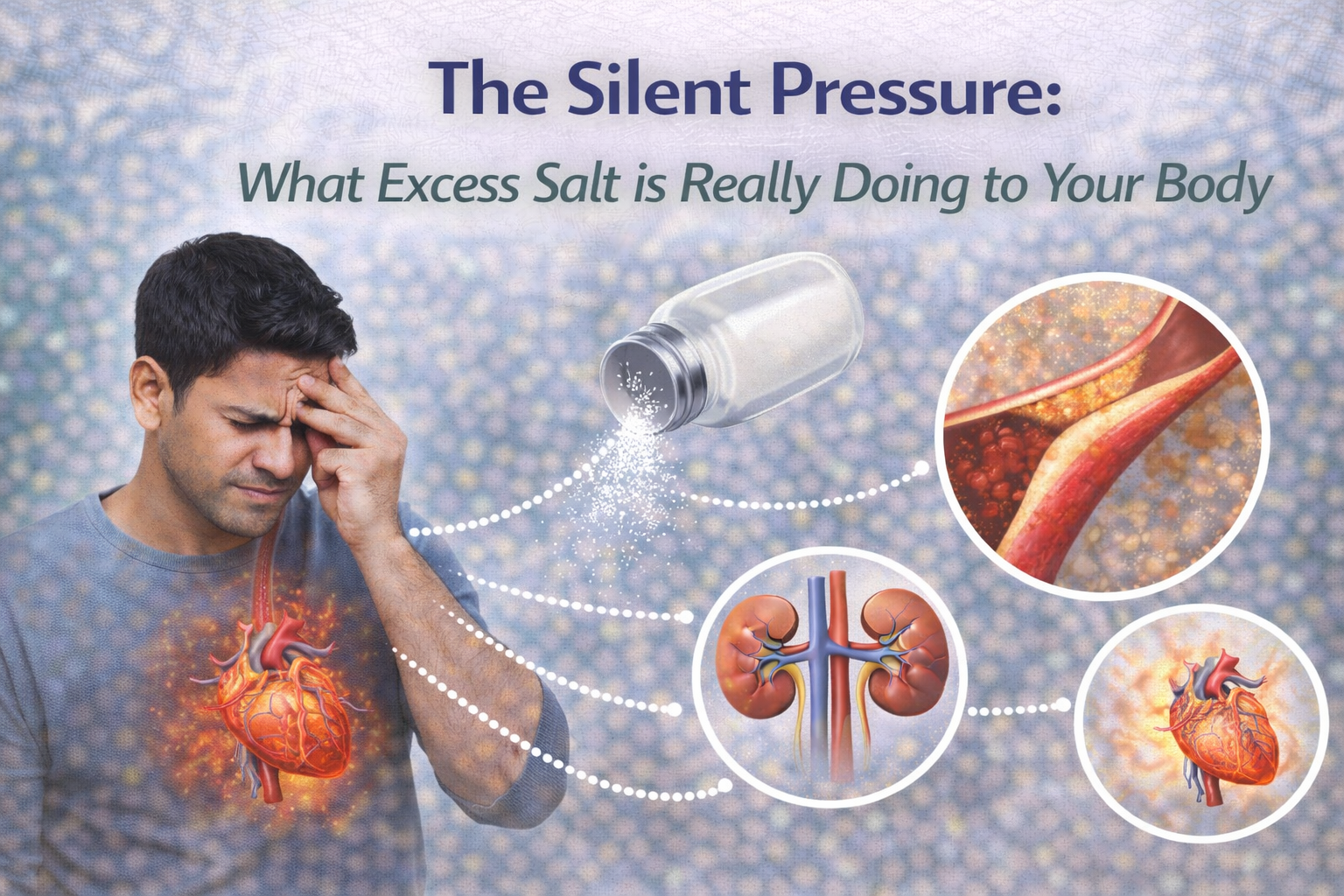
The Silent Pressure: What Excess Salt is Really Doing to Your Body
The Silent Pressure: What Excess Salt is Really Doing to Your Body
We’ve all heard the advice: "Eat less salt." But when you’re staring at a bag of crunchy chips or a delicious slice of pizza, that advice feels very far away. Salt makes food taste alive. In fact, our bodies actually need a small amount of sodium to keep our muscles moving and our nerves firing.
However, there is a big difference between the natural minerals our bodies crave and the "chemical salt" found in almost every processed food today. Most of us are consuming three to four times the amount of salt we actually need. While you might not feel it immediately, this excess salt is like a slow-moving storm inside your body, affecting everything from your brain to your ankles.
1. Your Kidneys: The "High-Pressure" Filters
Your kidneys are the primary victims of a high-salt diet. Their job is to balance the fluids in your blood.
The Problem: When you eat too much salt, the sodium levels in your bloodstream soar. Sodium acts like a sponge, pulling water out of your cells and into your blood vessels.
The Result: This extra water increases your blood volume, which means your heart has to pump much harder. This creates High Blood Pressure. Imagine a delicate garden hose being forced to handle the pressure of a fire hydrant—eventually, the tiny filters (nephrons) in your kidneys become scarred and stop working.
2. The "Puffiness" Factor (Water Retention)
Have you ever woken up with a "heavy" face or found that your rings are too tight on your fingers after a salty dinner?
The Problem: Your body is desperately trying to dilute the excess salt you ate. To do this, it holds onto every drop of water it can find.
The Result: This leads to "Edema" or swelling, particularly in the ankles, legs, and face. It’s not just an appearance issue; it’s a signal that your heart and kidneys are struggling to manage the fluid load.
3. Brain Fog and "Salt Headaches"
High salt intake doesn't just stay in your blood; it affects your head.
The Problem: Dehydration caused by salt can shrink the cells in your brain slightly, and the high blood pressure can cause the blood vessels in your brain to expand and contract painfully.
The Result: Many people experience "migraine-like" headaches after a very salty meal. Over time, high salt intake has even been linked to a higher risk of cognitive decline and "brain fog."
How to Lower Your Salt Without Losing Flavor
The goal isn't to eat bland, boring food. It’s about switching from "chemical salt" to "healing salt."
Switch to Rock Salt (Saindhava Namak): Refined white table salt is stripped of minerals and treated with anti-caking chemicals. Saindhava Namak is the Ayurvedic favorite. It is cooling, contains 84 trace minerals, and is much gentler on your blood pressure and kidneys.
The "Living Food" Flush: Fresh fruits like watermelon and oranges, and vegetables like cucumbers, are naturally low in sodium and high in potassium. Potassium is the "antidote" to salt—it helps your kidneys flush out the excess sodium.
Use "Acid" Instead of Salt: Next time you think a dish needs more salt, try a squeeze of fresh lemon juice or a splash of apple cider vinegar. The "brightness" of the acid often satisfies the tongue just as much as salt does.
A Human Reminder: It’s Hidden in Plain Sight
The biggest mistake we make is thinking that if we don't use the salt shaker, we are safe. 75% of the salt we eat is already hidden in the food we buy—bread, sauces, canned soups, and even "healthy" salad dressings.
By cooking more at home and choosing Living Foods, you take back control of your health. Your kidneys will thank you, your heart will beat easier, and that morning puffiness will disappear.
Frequently Asked Questions (FAQs)
Q1: Is sea salt better than table salt?
Ans: Sea salt is slightly better because it isn't as processed, but it still has the same amount of sodium. For the best health benefits, especially for your kidneys, Rock Salt (Himalayan Pink or Saindhava Namak) is the superior choice.
Q2: How long does it take for my body to "flush out" a salty meal?Ans: It usually takes about 24 to 48 hours for your kidneys to process an extreme salt spike. Drinking plenty of warm water and eating potassium-rich fruits can speed up this process.
Q3: Does salt affect my bones?
Ans: Yes! When your kidneys flush out excess salt, they unfortunately flush out calcium at the same time. Over many years, a high-salt diet can lead to weaker bones and a higher risk of osteoporosis.
Q4: I have low blood pressure; do I need more salt?
Ans: Sometimes, but you should get it from natural sources. Adding a pinch of Rock Salt to your water is a much healthier way to manage low blood pressure than eating processed junk food.
Q5: Will my taste buds adapt if I eat less salt?
Ans: Absolutely. It takes about 2 to 3 weeks for your taste buds to reset. After that, you’ll find that processed foods taste "unbearably salty" and you'll begin to taste the real flavors in fresh vegetables.
Need Personalized Kidney Care?
Book a free consultation with our kidney specialists today.