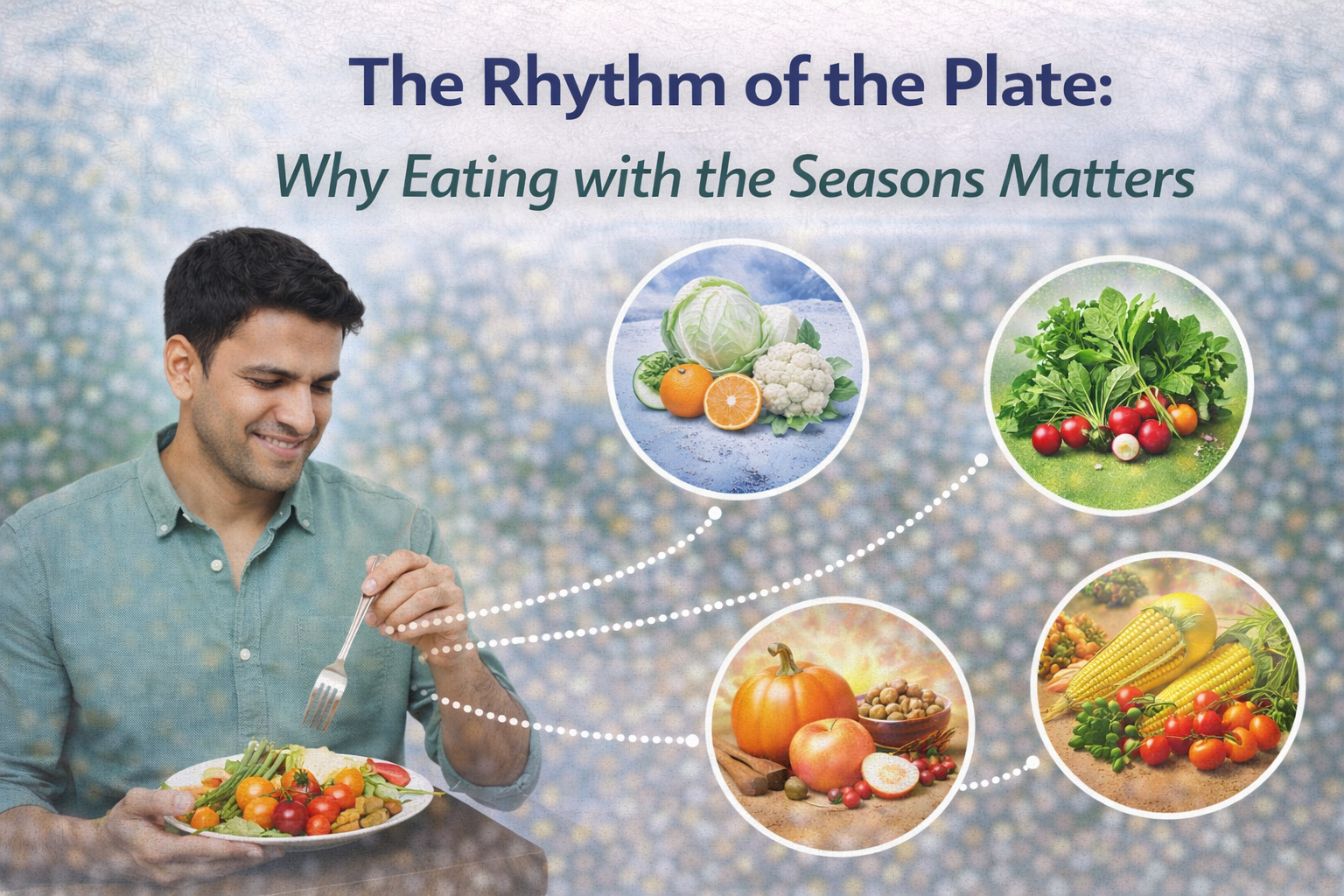
The Rhythm of the Plate: Why Eating with the Seasons Matters
The Rhythm of the Plate: Why Eating with the Seasons Matters
Have you ever noticed how a heavy bowl of soup feels perfect in December but almost impossible to finish in July? Or how a crisp, cold watermelon is the only thing you crave when the sun is blazing? This isn’t just a "food mood"—it’s your body’s deep, ancient intelligence trying to keep you in balance.
In Ayurveda, this is called Ritucharya (seasonal routine). Ayurveda teaches us that the world outside us and the world inside us are one and the same. When the seasons change, the environment around us shifts, and if we don't change what we eat, our internal "climate" gets out of sync. This is often when we fall sick, feel sluggish, or experience skin and digestive issues.
Why Your Body Needs a "Seasonal Menu"
Your body’s internal fire, or Agni, changes its strength depending on the weather. If you eat the same foods all year round, you are essentially asking your body to wear a winter coat in the summer.
Summer (The Cooling Phase): When it’s hot outside, your internal heat is actually lower because your body is trying to keep its core cool. This is the time for "Living Foods"—sweet, juicy fruits, cucumbers, and cooling herbs like mint and cilantro. This protects your kidneys from dehydration and prevents your blood from getting too "hot" or inflamed.
Winter (The Warming Phase): In the cold months, your internal fire burns much stronger to keep you warm. This is when your body can handle heavier, cooked meals like root vegetables, lentils, and healthy fats. Eating cold salads in the dead of winter can actually "dampen" your fire, leading to mucus buildup and a weak gut.
Monsoon/Spring (The Detox Phase): These "bridge" seasons are when the body naturally wants to shed the "Amma" (toxins) it accumulated in the previous season. This is the best time for light, easily digestible foods and bitter greens to help flush the liver and kidneys.
A Human Reminder: Nature is Your Best Doctor
The easiest way to follow an Ayurvedic seasonal diet is to look at what is growing in your local farmer's market. Nature never makes a mistake. It provides exactly what you need: hydrating melons in the heat and hearty, grounding squashes in the cold.
By eating seasonally, you stop "fighting" the weather and start flowing with it. You’ll find that your digestion stays strong, your weight stabilizes naturally, and your energy remains steady regardless of the temperature outside.
Frequently Asked Questions (FAQs)
Q1: Is it okay to eat imported fruits that aren't in season locally?
Ans:
While it’s fine occasionally, your body is most in tune with the environment you are currently living in. Local, seasonal food carries the "Prana" (life force) that is specific to your current climate, making it much easier to digest.
Q2: Why do I get more colds during the change of seasons?
Ans:
This is usually because the body is transitioning. If you haven't cleared out the toxins from the previous season, they "flare up" during the transition. Seasonal eating helps clear these toxins before they cause a problem.
Q3: Can eating seasonally help with kidney health?
Ans:
Absolutely. For example, eating cooling, hydrating foods in the summer prevents the kidneys from being stressed by concentrated toxins and high internal heat (inflammation).
Q4: Is it better to eat raw or cooked food according to the seasons?
Ans:
Ayurveda generally recommends more raw "Living Foods" in the summer to cool the body, and more warm, cooked foods in the winter to support the digestive fire.
Q5: What is the most important "seasonal" rule for everyone?
Ans:
Avoid ice-cold drinks regardless of the season. Even in summer, room-temperature or slightly cool water (from a clay pot) is better for your Agni than ice-water, which shocks your organs.
Need Personalized Kidney Care?
Book a free consultation with our kidney specialists today.