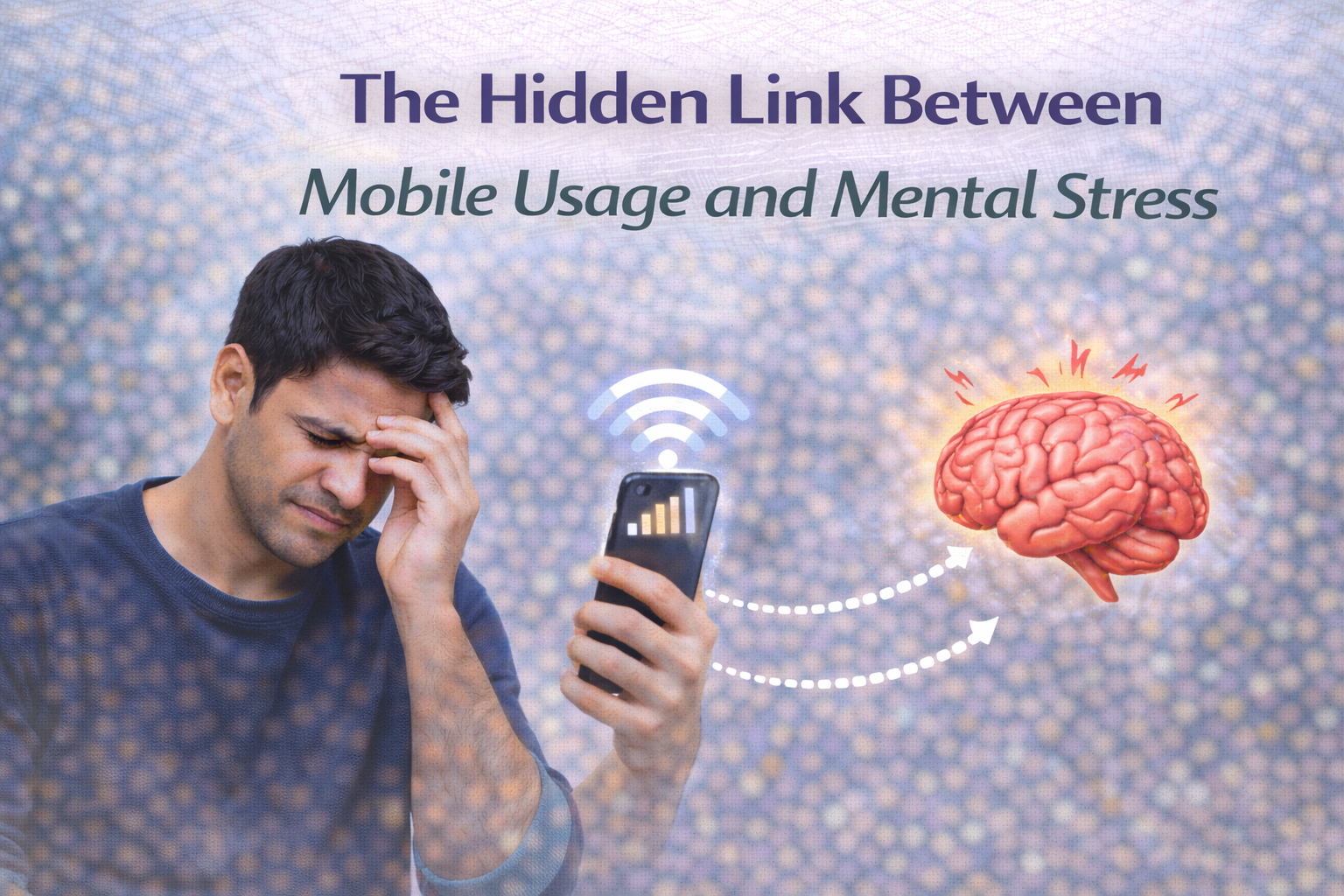
The Hidden Link Between Mobile Usage and Mental Stress
The Hidden Link Between Mobile Usage and Mental Stress
We live in an era where our smartphones have become like an extra limb. We wake up to them, we eat with them, and they are the last thing we see before we close our eyes at night. While these devices are designed to keep us "connected," they are secretly doing the opposite to our internal biology.
Have you ever noticed that after scrolling through social media or checking emails for an hour, you feel more tired than when you started? Or perhaps you feel a strange sense of "background anxiety" even when nothing is wrong? This isn't just in your head. There is a deep, physical link between the glass screen in your hand and the stress levels in your body.
1. The Dopamine Trap: A Constant State of Alert
Every time your phone pings, vibrates, or lights up, your brain releases a tiny hit of dopamine—the "reward" chemical.
- The Problem: Your brain starts to crave these hits. This puts your nervous system in a state of "High Alert," constantly waiting for the next notification.
- The Result: This keeps your body in a "Fight or Flight" mode. In Ayurveda, this is known as a disturbance of Vata (the air and movement element). When Vata is disturbed by too much digital stimulation, it leads to anxiety, shallow breathing, and a racing mind.
2. Blue Light and the "Sleep Sabotage"
Your phone emits a specific type of blue light that mimics the sun.
- The Problem: When you look at your phone at night, your brain thinks it is daytime. It stops producing melatonin, the hormone that tells your body to rest and repair.
- The Result: Even if you fall asleep, the quality of that sleep is poor. As we’ve discussed before, your kidneys do their deep cleaning and repair work during sleep. If your sleep is shallow because of late-night mobile usage, your kidneys stay stressed, and you wake up feeling heavy and "unfiltered."
3. The "Comparison" Stress (Cortisol Spikes)
When we scroll through the "perfect" lives of others, our brain subconsciously triggers a stress response. We feel a sense of lack, or the "Fear Of Missing Out" (FOMO).
- The Problem: This mental comparison triggers the release of cortisol, the primary stress hormone.
- The Result: High cortisol doesn't just make you feel stressed; it physically harms you. It raises your blood pressure and forces your kidneys to work harder to manage the chemical imbalance. Over time, "digital stress" can lead to real physical wear and tear on your internal organs.
How to Break the Digital Chain Naturally
You don’t have to throw your phone away, but you do need to set "human boundaries" to protect your mental and physical health.
- The "Golden Hour" Rule: Do not touch your phone for the first hour after you wake up and the last hour before you go to sleep. Use this time to connect with yourself instead of the internet.
- Practice Grounding (Earthing): If you’ve spent all day on your phone, your body is full of "electrical tension." Spend 15 minutes walking barefoot on the grass. This helps "drain" the digital stress and brings your nervous system back to earth.
- The "Greyscale" Trick: Change your phone display to black and white (Greyscale). Most apps use bright colors to "hook" your brain. When the colors are gone, your brain finds the phone much less "addictive," and your stress levels naturally drop.
A Human Reminder: You Are Not a Battery
Your phone needs to be plugged in to charge, but you are charged by nature, sunlight, and deep rest. When you spend more time looking at a screen than at the sky, your "biological battery" begins to leak.
By putting the phone down, you aren't "missing out"—you are gaining back your focus, your calm, and your health. Give your eyes, your brain, and your kidneys a break from the digital noise. for more info you can visit agappe.com
Frequently Asked Questions (FAQs)
Q1: Can using my phone really affect my kidney health?
Ans: Indirectly, yes. Excessive phone use leads to stress and poor sleep. Chronic stress raises blood pressure, and poor sleep prevents the kidneys from repairing themselves. Both are major risk factors for kidney decline.
Q2: Why do I feel "phantom vibrations" in my pocket?
Ans: This is a sign that your nervous system is over-stimulated. Your brain has become so "wired" to expect a notification that it misinterprets muscle twitches as a phone vibrating. It’s a clear signal to take a digital detox.
Q3: Does "Night Mode" or blue-light filters actually work?
Ans: They help reduce eye strain, but they don't stop the mental stimulation. Even with a filter, the content you are consuming (news, social media) keeps your brain active and stressed. The best filter is putting the phone away.
Q4: How does mobile usage affect digestion?
Ans: If you look at your phone while eating, your body is in "distracted mode." This weakens your Digestive Fire (Agni). You end up swallowing air and not chewing properly, which leads to bloating and toxic buildup (Amma).
Q5: What is a "Digital Fast"?
Ans: It is a practice where you pick one day a week (like Sunday) to keep your phone off or in another room. This gives your nervous system a full 24 hours to reset and heal.
Need Personalized Kidney Care?
Book a free consultation with our kidney specialists today.