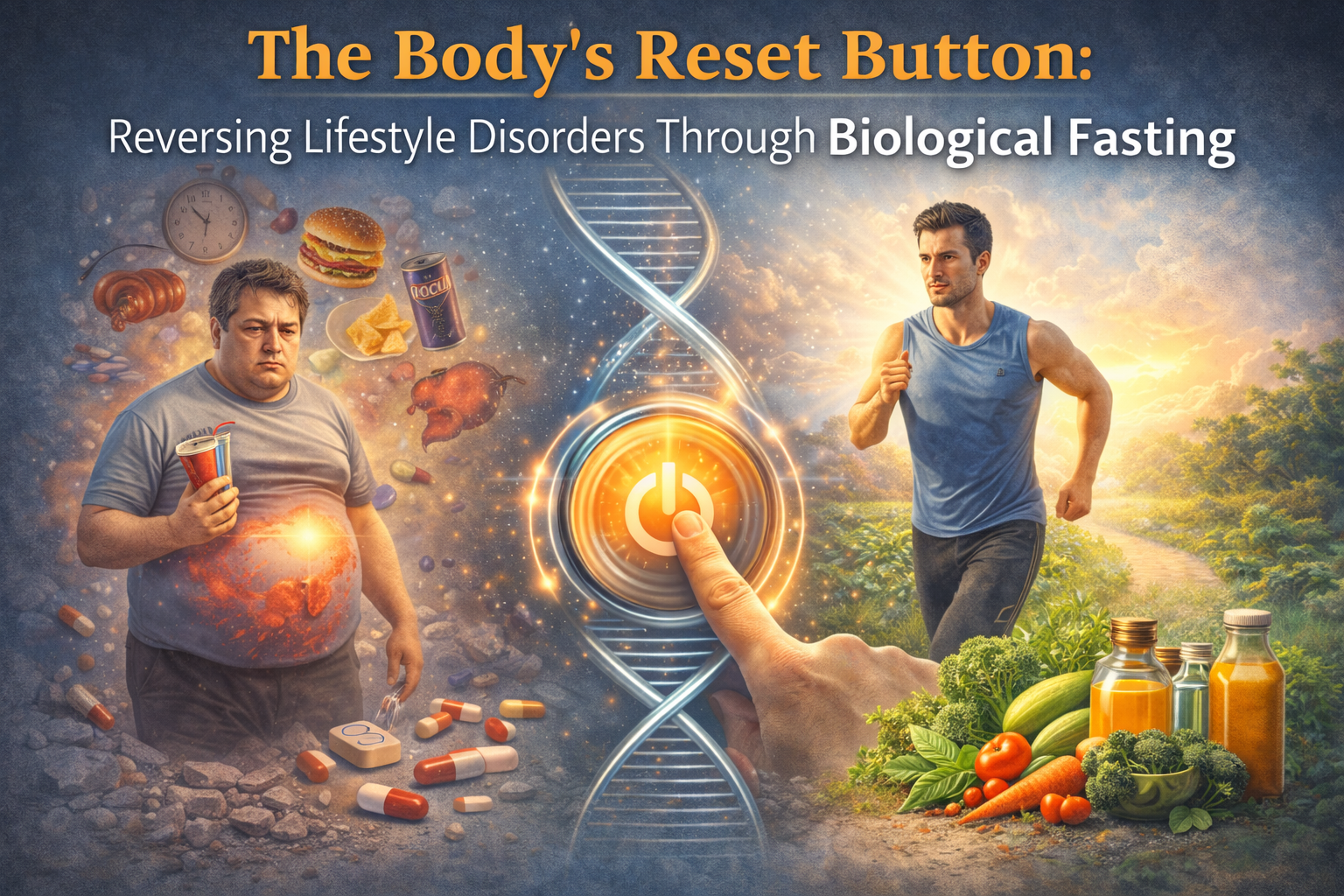
The Body’s Reset Button: Reversing Lifestyle Disorders Through Biological Fasting
The Body’s Reset Button: Reversing Lifestyle Disorders Through Biological Fasting
We live in a world that never stops eating. From midnight snacks to "power breakfasts," our digestive systems are working 24/7. But here is a truth that ancient Ayurveda and modern science now agree on: Your body cannot heal while it is busy digesting. Think of your body like a busy office. If new paperwork (food) keeps piling up on the desk every hour, the staff never has time to clean the filing cabinets, take out the trash, or repair the broken furniture. Biological Fasting is simply giving the office a "closed" sign so the deep cleaning can finally begin.
What Exactly is "Biological Fasting"?
It isn’t about starving yourself or going on a miserable "water-only" hunger strike. Biological fasting is about aligning your eating habits with your body's natural circadian rhythm. In Ayurveda, this is known as Laghana (lightness).
When you stop eating for a specific window—usually 14 to 16 hours—your body hits a "Reset Button" called Autophagy. This is a Nobel Prize-winning concept that literally means "self-eating." Your body starts identifying old, damaged cells and toxic proteins (the stuff that causes high creatinine and insulin resistance) and recycles them for energy.
How Fasting Reverses Lifestyle Disorders
- The Kidney Break: Your kidneys have to filter every single thing you eat. When you fast, the level of toxins in your blood drops, giving your "nephrons" a much-needed holiday. This is why many people see a drop in urea and creatinine levels just by changing when they eat.
- Resetting Insulin: If you have Type 2 Diabetes, your cells are "tired" of insulin. Fasting clears the sugar out of your system and makes your cells sensitive again. It’s like rebooting a frozen computer.
- Blood Pressure Control: During a fast, your body sheds excess sodium and water. This naturally relaxes your blood vessels and takes the "pumping pressure" off your heart.
The "16:8" Human Strategy
You don't need to be a monk to do this. The most "human-friendly" way to hit the reset button is the 16:8 Method:
- The Window: Eat all your meals within an 8-hour window (e.g., 10 AM to 6 PM).
- The Fast: For the remaining 16 hours (which includes your sleep time), stick to water or light herbal teas.
- The Rule: Your last meal should be before sunset. Digestion is tied to the sun; when the sun goes down, your "Agni" (digestive fire) goes to sleep. If you eat a heavy meal at 10 PM, it sits in your gut like a stagnant pool, creating toxins (Amma).
A Human Note: Listen to Your "Engine"
If you are used to eating 5-6 times a day, your body might grumble for the first 3 days. That’s not "true hunger"—it’s just your hormones adjusting. Drink some warm water, take a walk, and wait.
Important: If you are on insulin or heavy BP medication, you must monitor your levels closely. As your body resets, you may actually need less medicine, and taking the same dose on an empty stomach could make your levels drop too low.
"Healing doesn't require adding more things; sometimes, it requires taking away the noise."
Frequently Asked Questions (FAQs)
- Q1: Will fasting make me weak?
- Ans: Actually, most people report more energy after the first few days because the body isn't wasting all its power on digestion.
- Q2: Can I drink tea or coffee during the fast?
- Ans: Stick to plain water or herbal decoctions like Ginger or Coriander water. Milk and sugar will "break" the biological reset.
- Q3: Is fasting safe for kidney patients?
- Ans: Intermittent fasting is generally very helpful, but "dry fasting" (without water) is dangerous for kidneys. Always keep hydrated!
Need Personalized Kidney Care?
Book a free consultation with our kidney specialists today.