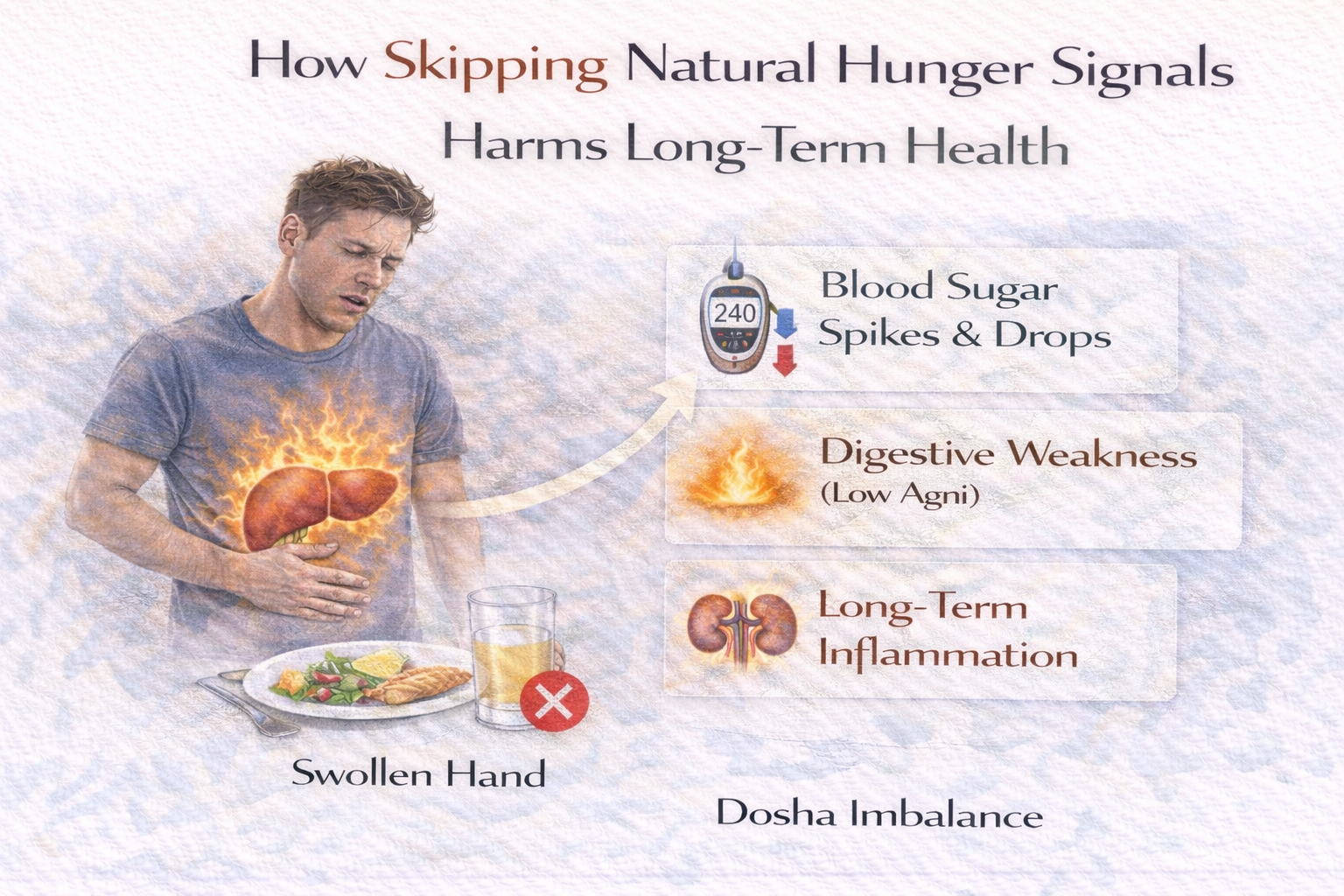
How Skipping Natural Hunger Signals Harms Long-Term Health
How Skipping Natural Hunger Signals Harms Long-Term Health
In our busy lives, hunger has become an "inconvenience." We skip breakfast because we’re rushing to work, or we push through lunch because of a meeting. We think we’re being productive, but in Ayurveda, skipping your natural hunger signal is considered a major crime against your body.
Your hunger isn’t just a "feeling"—it is the sound of your Agni (Digestive Fire) roaring. When you ignore it, you aren't just missing a meal; you are slowly breaking your body’s internal engine.
1. The "Cold Engine" Problem
Imagine you start a fire to cook a meal, but you never put any wood on it. Eventually, the fire goes out, leaving only cold ash.
- The Problem: When your body sends a hunger signal, it has released enzymes and acids, ready to "burn" food. If you don't eat, that fire has nothing to work on.
- The Result: The fire dies down. Over time, your Agni becomes weak and "cold." This is why people who skip meals often feel bloated or heavy even when they eat something very light later on—the engine is simply too cold to start.
2. The Creation of "Mental Amma"
When you are hungry but don't eat, your body enters "Survival Mode."
- The Cause: This triggers Vata (air energy) and Pitta (fire energy) to rise.
- The Result: You get "hangry"—irritable, anxious, and shaky. Ayurveda calls this Mental Amma (toxic thoughts). This stress doesn't just stay in your head; it travels through your blood, making it acidic and putting extra pressure on your Liver and Kidneys.
3. The "Emergency Storage" Trap
If you habitually skip meals, your body stops trusting you.
- The Result: It thinks there is a famine. The next time you do eat, the liver doesn't turn that food into energy; it stores it as fat around your organs to "save" for the next time you starve it. This is a leading cause of Non-Alcoholic Fatty Liver Disease in people who "don't eat that much."
How to Respect Your "Internal Fire"
- The 80% Rule: Don't wait until you are starving to eat, and don't eat until you are stuffed. Eat when you feel a "pleasant" hunger, and stop when you feel 80% full.
- The Clay Pot Sip: If you are in a meeting and absolutely cannot eat, sip water from a clay pot. Its natural minerals help soothe the "Pitta" acidity in your stomach so the fire doesn't burn your internal lining while you wait.
- The "Living" Snack: If you can't have a full meal, have a piece of Papaya or a few soaked Almonds. These "Living Foods" give the Agni something to work on without requiring a massive amount of energy to digest.
Frequently Asked Questions (FAQs)
Q1: Is Intermittent Fasting bad for my Agni?
Ans: It depends. If you are fasting but feel light and energetic, it’s working. But if you are forcing yourself to stay hungry while feeling "acidic," angry, or dizzy, you are damaging your liver and creating Amma.
Q2: Why do I lose my appetite when I’m stressed?
Ans: Stress "blows out" the digestive fire like a strong wind. Ayurveda says you should wait for the wind to calm down (through deep breathing or Grounding) before you put food in your stomach.
Q3: Can skipping meals affect my Kidneys?
Ans: Yes. When you skip meals, the body breaks down muscle and fat for energy, which creates metabolic waste. Without food and proper hydration, this "waste" becomes concentrated, making it harder for the kidneys to filter.
Q4: Should I eat even if I’m not hungry?
Ans: No. Ayurveda’s golden rule is: Never eat without hunger. But the goal is to live a lifestyle where your hunger signals come at regular, healthy intervals.
Q5: What is the best way to "re-start" a lost appetite?
Ans: The Ginger Reset. Chew a small slice of ginger with rock salt 15 minutes before you want to eat. It’s like clicking a lighter for your internal stove.
Need Personalized Kidney Care?
Book a free consultation with our kidney specialists today.