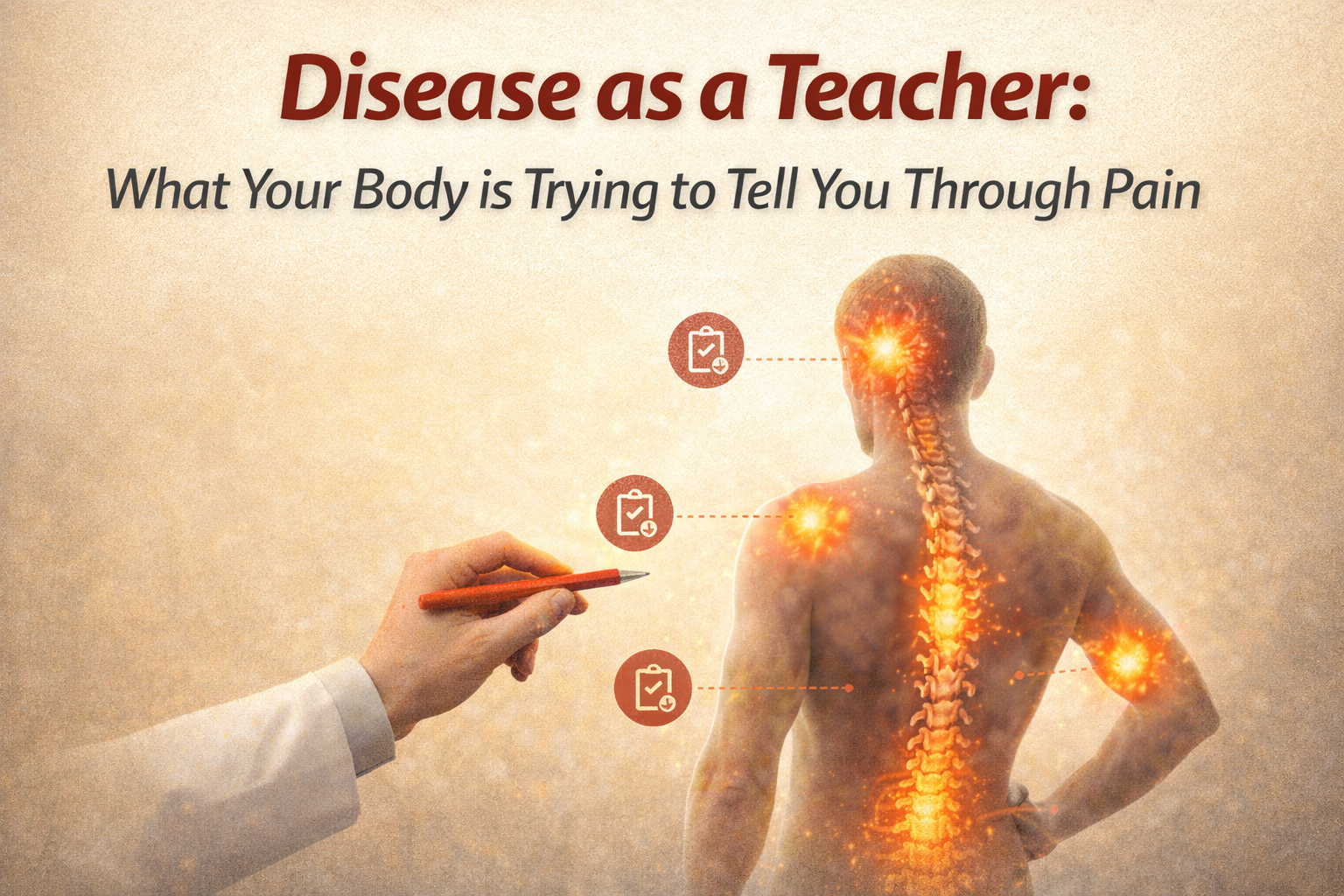
Disease as a Teacher: What Your Body is Trying to Tell You Through Pain
Disease as a Teacher: What Your Body is Trying to Tell You Through Pain
When we feel pain, our first instinct is usually to silence it. We reach for a painkiller, a spray, or a pill to make the sensation go away so we can get back to our "normal" lives. We treat pain like an annoying intruder or a glitch in the machine.
But what if we looked at pain differently? In the world of true healing, disease is not an enemy; it is a teacher. It is your body’s way of tapping you on the shoulder because it doesn't have a voice to speak in words. Pain is a highly sophisticated feedback system trying to tell you that something in your life—your diet, your thoughts, or your pace—is no longer serving you.
The "Dashboard" of Your Life
If the oil light flashes on your car’s dashboard, you don’t get angry at the light. You don’t try to smash the bulb to make it stop blinking. You realize the light is a "friend" warning you that the engine needs oil.
Your body works the same way:
- A Migraine might be your body saying, "You are overthinking and neglecting your hydration."
- Lower Back Pain often carries the message, "You are carrying too much emotional or financial stress alone."
- A Kidney Spike is a loud shout: "The filters are exhausted; please stop pouring toxins into the system."
When we just "manage" the symptom with a pill, we are effectively smashing the light on the dashboard while the engine continues to burn.
Learning the Language of Your Organs
Every organ in your body has a "personality" and reacts to different life choices.
- The Stomach: This is where we digest not just food, but life. If you are "swallowing" anger or "eating" your words, your stomach will react with acidity or knots.
- The Joints: Pain here often represents a lack of flexibility—not just in the body, but in the mind. Are you being too rigid with yourself or others?
- The Heart: It isn't just a pump. Physical heart heaviness often mirrors a life that has become too serious, lacking joy and "lightness."
How to Listen to the Teacher
The next time you feel a flare-up or a sharp pain, instead of getting frustrated, try this "Human Connection" exercise:
- Pause and Ask: Sit quietly for two minutes. Place your hand on the area that hurts and ask, "What are you trying to tell me?" * Look at the Clock: Does the pain happen at the same time every day? If it's after lunch, maybe it's the food. If it's Sunday night, maybe it's the work-related stress.
- The Lifestyle Audit: If your creatinine is rising, look back at the last six months. Have you been sleeping? Have you been angry? Have you been eating "dead" food? The answer is usually right there in your daily routine.
A Human Reminder
Your body is the most loyal partner you will ever have. It works for you 24/7 without you even asking. It doesn't "create" disease to punish you; it creates symptoms to save you from something worse.
True healing begins the moment you stop fighting your symptoms and start listening to them. When you learn the lesson the teacher is trying to give, the "lesson" (the pain) often has no reason to stay anymore.
"Don't just ask for the pain to go away; ask why it came in the first place."
Frequently Asked Questions (FAQs)
- Q1: Can "emotional healing" really lower my blood pressure?
- Ans: Absolutely. When you resolve a deep-seated stress or anger, your nervous system moves from "Fight or Flight" to "Rest and Digest," which naturally relaxes your arteries.
- Q2: Does this mean I shouldn't take medicine for pain?
- Ans: Medicine is for temporary relief, like a bandage. But don't stop there. Use the relief to gain the clarity needed to fix the root cause.
- Q3: How do I know if my pain is "mental" or "physical"?
- Ans: In Ayurveda, there is no difference. Every physical pain has a mental root, and every mental stress creates a physical toxin (Ama). They are two sides of the same coin.
Need Personalized Kidney Care?
Book a free consultation with our kidney specialists today.