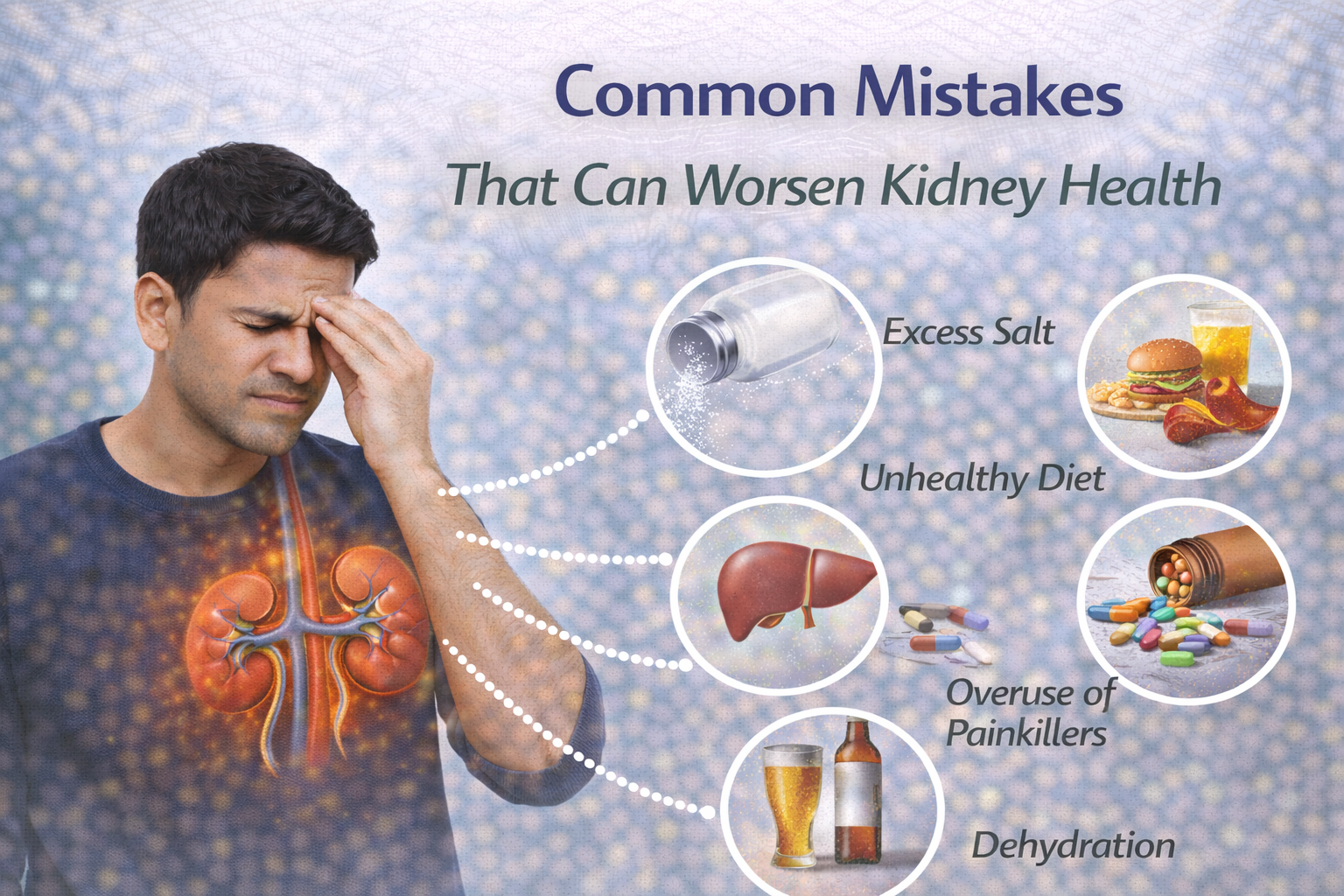
Common Mistakes That Can Worsen Kidney Health
Common Mistakes That Can Worsen Kidney Health
We often think of our kidneys like a high-tech filtration system—something that just runs in the background without needing much attention. But in reality, your kidneys are more like a delicate, living garden. If you stop watering them, or if you pour chemicals on them, the "plants" (your filtering units) start to wither.
The scary thing about kidney health is that it is often a "silent" struggle. You might be making small mistakes every day that are putting your kidneys under pressure, and you won't feel the consequences until the damage is already done.
If you want to keep your internal filters clean and strong, here are the most common mistakes you should avoid—and how to fix them starting today.
1. Relying Too Much on Painkillers (NSAIDs)
This is perhaps the most common "hidden" cause of kidney damage. When we have a headache or back pain, we often reach for over-the-counter pills like Ibuprofen or other NSAIDs (Non-Steroidal Anti-Inflammatory Drugs).
The Mistake: Taking these pills frequently or in high doses.
The Impact: These medications work by reducing blood flow. While they reduce inflammation in your joints, they also reduce the blood flow to your kidneys. Over time, this "starves" your kidney tissues of oxygen and nutrients, leading to chronic scarring.
The Fix: Try natural anti-inflammatories like Ginger or Turmeric, or use heat therapy. If you must take a painkiller, always consult a professional about the "kidney-safe" dose.
2. Ignoring the "Hidden" Salt and Sugar
Most people know that salt raises blood pressure, but we often think we are safe because we don't use the salt shaker.
The Mistake: Eating processed "convenience" foods like bread, biscuits, frozen meals, and sodas.
The Impact: 75% of the salt we eat is hidden in processed food. This excess salt forces the kidneys to hold onto water, raising your blood pressure. Meanwhile, hidden sugars make your blood "sticky" and inflamed, which acts like sandpaper on your delicate kidney filters.
The Fix: Switch to a Living Food Diet. If your food doesn't have a label (like an apple, a cucumber, or a bunch of grapes), it’s usually medicine for your kidneys.
3. "Chugging" Water Instead of Sipping It
There is a big myth that drinking gallons of water will "wash out" your kidneys.
The Mistake: Forcing yourself to drink massive amounts of water all at once.
The Impact: When you chug a liter of water in one go, you suddenly increase your blood volume. This puts an immediate "pressure spike" on your kidneys, forcing them to work at 100% capacity just to get rid of the excess.
The Fix: Drink water like a slow-moving river, not a flash flood. Sip room-temperature water (ideally from a clay pot) throughout the day. This allows your cells to actually absorb the water rather than just stressing your bladder and kidneys.
4. Holding in Your Urine
In our busy lives, we often ignore the "urge to go" because we are in a meeting or driving.
The Mistake: Regularly holding your urine for long periods.
The Impact: This increases the pressure inside the kidneys and allows bacteria to sit in the bladder longer, increasing the risk of UTIs (Urinary Tract Infections). Chronic pressure can eventually cause urine to "back up" toward the kidneys, leading to long-term damage.
The Fix: When your body signals, listen! Making your kidney health a priority is more important than that extra five minutes of work.
5. Neglecting Your Sleep
Many people don't realize that kidney function is actually regulated by your sleep-wake cycle.
The Mistake: Getting less than 7 hours of sleep or staying up very late.
The Impact: Your kidney tissues do their most intense "repair work" while you are in deep sleep. If you are awake, your blood pressure stays higher, and the kidneys never get that "rest and restore" window.
The Fix: Try to be in bed by 10:00 PM. This aligns with the natural Ayurvedic cycle of the body, giving your kidneys the best environment for self-healing.
A Human Reminder: Your Body is a Partner
Your kidneys are incredibly resilient, but they aren't indestructible. They are working 24/7 to keep you alive and clean. By avoiding these common mistakes, you aren't just "preventing disease"—you are showing respect to the organs that keep your life-force flowing.
Small changes, like switching to Rock Salt (Saindhava Namak) and sipping warm water, can be the difference between a lifetime of health and a lifetime of struggle.
Frequently Asked Questions (FAQs)
Q1: Can my kidneys recover if I stop these mistakes?
Ans: Absolutely. While deep scarring is permanent, the "functional" parts of your kidneys can become much more efficient once the pressure (salt, sugar, chemicals) is removed.
Q2: Is "Low-Sodium" salt better?
Ans: Be careful. Many low-sodium salts replace sodium with potassium chloride, which can be very dangerous for people who already have kidney issues. Stick to natural Rock Salt (Himalayan Pink) in moderation.
Q3: Does caffeine hurt the kidneys?
Ans: Caffeine is a "diuretic," which means it makes your kidneys work harder to push water out. It also raises blood pressure. One cup is usually fine, but don't let it replace your water intake.
Q4: Why is my urine foamy?
Ans: Consistent foam is often a signal that protein is "leaking" through your filters. This is a sign that your kidneys are under stress and you should switch to a Living Food Diet and check your salt intake immediately.
Q5: Is exercise good for kidneys?
Ans: Yes! Gentle movement like walking helps control blood sugar and blood pressure. However, avoid "extreme" supplements like pre-workout powders or excessive protein shakes, as these can put a massive chemical load on your kidneys.
Need Personalized Kidney Care?
Book a free consultation with our kidney specialists today.