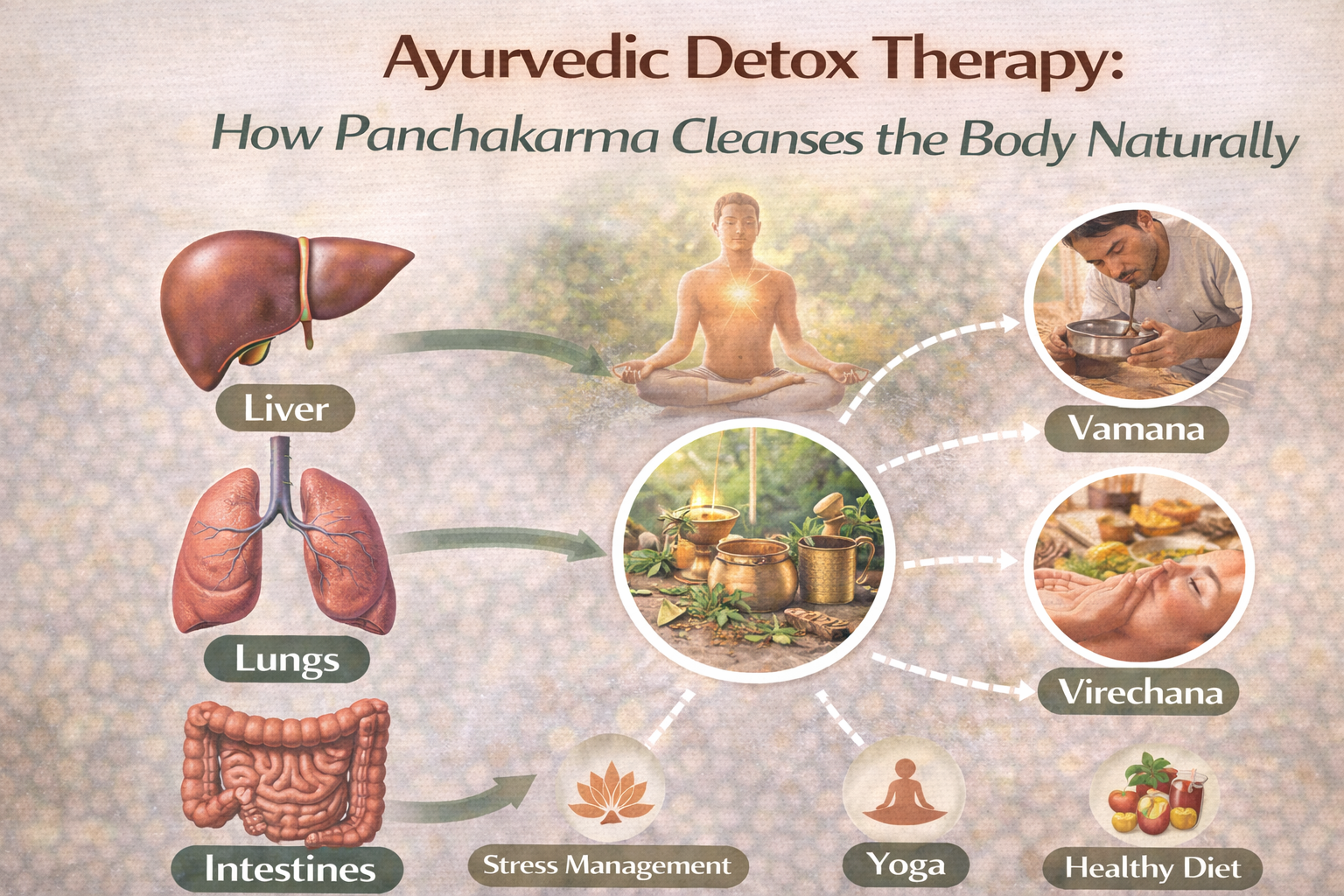
Ayurvedic Detox Therapy: How Panchakarma Cleanses the Body Naturally
Ayurvedic Detox Therapy: How Panchakarma Cleanses the Body Naturally
In our modern world, we are obsessed with "detoxing." We see advertisements for 3-day juice cleanses, charcoal drinks, and restrictive diets that promise to "flush" our systems. But the truth is, your body isn't a kitchen drain that just needs a bottle of cleaner poured down it. Your body is a complex, living ecosystem.
Thousands of years ago, the sages of India developed a system called Panchakarma. In Sanskrit, Pancha means five and Karma means actions. It isn’t just a "detox"; it is a deep-tissue biological reset. While a juice cleanse might clean your gut for a day, Panchakarma is designed to pull toxins out of your fat cells, your joints, and your deepest organs—especially your kidneys and liver.
The "Why" Behind the Cleanse
Every day, we accumulate what Ayurveda calls Amma. Think of Amma as "biological sludge." It’s the result of undigested food, pollution, stress, and chemicals.
- The Problem: When Amma builds up, it clogs the Srotas (the microscopic channels of the body). When the channels are clogged, your kidneys can't filter blood properly, your hormones get out of whack, and you start feeling "heavy," foggy, and tired.
- The Goal: Panchakarma isn't about "starving" the body. It’s about "loosening" that sludge and guiding it out of the body so your organs can breathe again.
The 3 Stages of a Real Human Detox
A real Panchakarma treatment is a journey that happens in three specific phases. You can’t just jump into the deep clean; you have to prepare the "house" first.
1. Poorva Karma (The Preparation)
Imagine trying to peel a sticker off a dry surface—it rips and leaves a mess. But if you oil it first, it slides right off.
- What happens: You consume warm, medicated ghee (Snehana) and receive warm oil massages (Abhyanga).
- The Result: This "oils" your internal tissues, causing the deep-seated toxins to let go of your cells and move into your digestive tract.
2. Pradhana Karma (The 5 Actions)
Once the toxins are "loose" and sitting in the gut, Ayurveda uses five specific methods to remove them. Depending on your body type (Vata, Pitta, or Kapha), a practitioner might use:
- Basti (Medicated Enema): Often called the "Mother of all treatments," it cleanses the colon and balances the nervous system.
- Nasya (Nasal Clearing): Using herbal oils in the nose to clear the head and sinuses.
- Virechana (Gentle Purgation): Cleaning the small intestine and liver to remove excess "heat" or Pitta.
3. Paschat Karma (The Aftercare)
This is the most skipped, yet most important part. Your "Digestive Fire" (Agni) is very sensitive after a detox.
- The Practice: You slowly reintroduce "Living Foods" like Kitchari (a simple rice and mung dal porridge).
- The Result: This restarts your engine gently so you don't shock your kidneys or gut with heavy food too soon.
The Human Benefits: More Than Just Weight Loss
People often finish Panchakarma and say they feel "lighter," but what’s happening inside is even better:
- Kidney Restoration: By removing the toxic load from the blood, the kidneys finally get a "vacation" from filtering heavy chemicals and waste.
- Mental Clarity: There is a direct link between a clean gut and a clear mind. The "brain fog" usually vanishes by day four.
- Joint Relief: Much of our joint pain is just "Amma" sitting in the gaps between our bones. When the sludge is gone, the pain often goes with it.
A Human Reminder: You Don’t Always Need a Clinic
While a full Panchakarma is best done under the care of an Ayurvedic doctor, you can practice a "Mini-Detox" at home every day:
- Sip Warm Water: Keep your "pipes" hydrated.
- Oil Your Body: A simple 5-minute self-massage before a shower keeps toxins from sticking.
- Eat with the Sun: Make lunch your biggest meal so your body has time to "burn" everything off.
Frequently Asked Questions (FAQs)
Q1: Is Panchakarma painful?
Ans: Not at all! Most of the process involves warm oil, steam, and rest. It is designed to be a deeply soothing experience for the nervous system.
Q2: How long does a full treatment take?
Ans: A traditional cycle is usually 7, 14, or 21 days. The longer you stay, the deeper the "scraping" of toxins from the tissues.
Q3: Can I do this if I have a chronic illness?
Ans: Yes, but you must do it under expert supervision. For conditions like chronic kidney issues, the treatments are modified to be very gentle and nourishing rather than "purging."
Q4: Will I lose weight?
Ans: Most people lose "water weight" and "toxic weight." More importantly, your metabolism resets, making it much easier to maintain a healthy weight afterward.
Q5: How often should I detox?
Ans: Ayurveda recommends a seasonal "reset" twice a year—usually during the change of seasons (Spring and Autumn) when the body is naturally trying to shed its old layers.
Need Personalized Kidney Care?
Book a free consultation with our kidney specialists today.