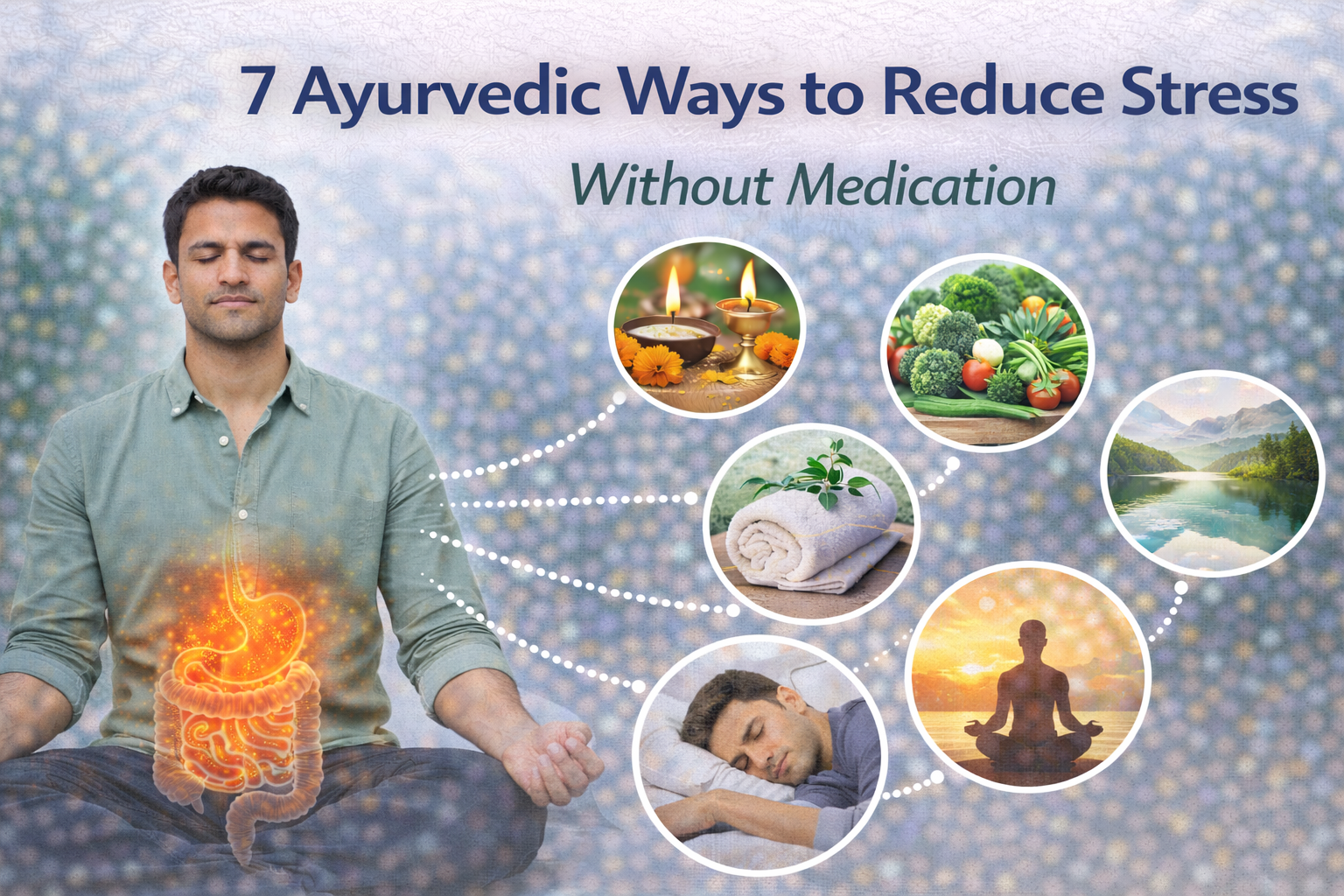
7 Ayurvedic Ways to Reduce Stress Without Medication
7 Ayurvedic Ways to Reduce Stress Without Medication
In today's world, we often treat stress like a normal part of life—something we just have to "deal with" until our next vacation. We’ve become so used to the tight shoulders, the racing mind, and the "knots" in our stomach that we forget what it feels like to be truly calm.
When we are stressed, our body isn't just "worried"—it is in a state of chemical emergency. In Ayurveda, stress is seen as an imbalance of our vital energies. When we stay in this state too long, it dries out our system, slows down our digestion, and puts an enormous strain on our kidneys and heart.
The good news? You don’t always need a pill to find peace. Ayurveda offers us simple, time-tested "anchors" to pull us out of the storm and back into balance.
1. The Power of "Grounding" (Earthing)
Most of us spend our entire day "insulated" from the earth by rubber shoes, carpets, and concrete. We build up a kind of "static electricity" from stress and electronics.
- The Practice: Spend 10–15 minutes walking barefoot on wet grass, sand, or clean soil.
- Why it works: The earth has a natural negative charge that helps "drain" the positive charge of inflammation and stress from your body. It literally pulls the tension out through your feet.
2. Abhyanga (Self-Massage with Warm Oil)
In Ayurveda, the word for oil is Sneha, which is also the word for "love." Massaging yourself with oil is an act of self-love that tells your nervous system it is safe.
- The Practice: Before your shower, gently massage warm sesame or coconut oil onto your body. Focus on your scalp and the soles of your feet.
- Why it works: This practice lowers cortisol (the stress hormone) and creates a "shield" around your nervous system, making you less reactive to the chaos of the day.
3. Nasya (Nasal Oil Application)
According to Ayurveda, the nose is the gateway to the brain. When our nasal passages are dry, our "Vata" (air element) becomes disturbed, leading to anxiety and racing thoughts.
- The Practice: Put two drops of warm ghee or sesame oil in each nostril in the morning or before bed.
- Why it works: This keeps the "gateway" lubricated and has a direct calming effect on the mind and the emotional centers of the brain.
4. Sip Warm "Living Water"
When we are stressed, we often reach for coffee or ice-cold water. Both of these shock the system.
- The Practice: Sip warm water (stored in a clay pot) throughout the day.
- Why it works: Warm water is soothing to the gut. Since 90% of our "happy hormones" (serotonin) are made in the gut, a happy stomach means a happy, calm mind.
5. The "Prana" Breath (Sitali Pranayama)
Stress often creates "heat" in the body—we feel flushed, angry, or irritated.
- The Practice: Roll your tongue into a tube (or purse your lips) and inhale deeply through the mouth as if through a straw. Exhale through the nose.
- Why it works: This is known as the "Cooling Breath." It physically cools the blood and calms the "fire" in the brain, helping you make decisions from a place of peace rather than panic.
6. Eat "Sattvic" (Pure) Foods
What you eat becomes your thoughts. Processed, salty, and "dead" foods make the mind restless and heavy.
- The Practice: Include more "Living Foods" like sweet juicy fruits, soaked almonds, and fresh vegetables in your diet.
- Why it works: These foods are full of Prana (life force). They nourish the heart and kidneys without creating the toxic "sludge" (Amma) that makes us feel foggy and stressed.
7. Sun Gazing (Early Morning)
Our internal clock is set by the sun. If we stay under artificial lights all day, our body doesn't know when to be alert or when to rest.
- The Practice: Spend 5 minutes looking toward (not directly at) the rising sun during the first hour of daylight.
- Why it works: This triggers the release of serotonin, which stabilizes your mood for the entire day and helps you produce melatonin for deep sleep at night.
A Human Reminder: You Are Not a Machine
We often feel stressed because we expect ourselves to work like computers—consistent, fast, and never needing a break. But you are a living, breathing part of nature. By using these Ayurvedic anchors, you aren't just "managing" stress; you are choosing a different way to live—one where your peace is more important than your "to-do" list.
Frequently Asked Questions (FAQs)
Q1: How soon can I feel the results of these practices?
Ans: Some, like Grounding and Cooling Breath, work instantly to lower your heart rate. Others, like Abhyanga, show their true power after 3–5 days of consistent practice.
Q2: Can I do Nasya if I have a cold?
Ans: It’s best to avoid Nasya when you have a heavy cold or congestion. Wait until your passages are clear, then use it to keep them healthy and calm.
Q3: Is warm water really better than cold water for stress?
Ans: Yes. Ice-cold water constricts your blood vessels and "shocks" the vagus nerve, which tells your brain to stay on high alert. Warm water sends a "relax" signal to the brain.
Q4: I don't have grass nearby. How can I practice Grounding?
Ans: You can touch a tree, sit on a stone, or even use a copper grounding mat. The goal is to make physical contact with a natural, conductive surface.
Q5: Why is salt bad for stress?
Ans: Excess refined salt raises blood pressure and puts the kidneys under pressure. When the kidneys are stressed, the body stays in a state of "fluid tension," which mirrors mental tension.
Need Personalized Kidney Care?
Book a free consultation with our kidney specialists today.